Call for Paper
The 8th DementiaLab conference invites participants to contribute to this years theme: Synapses of Design.
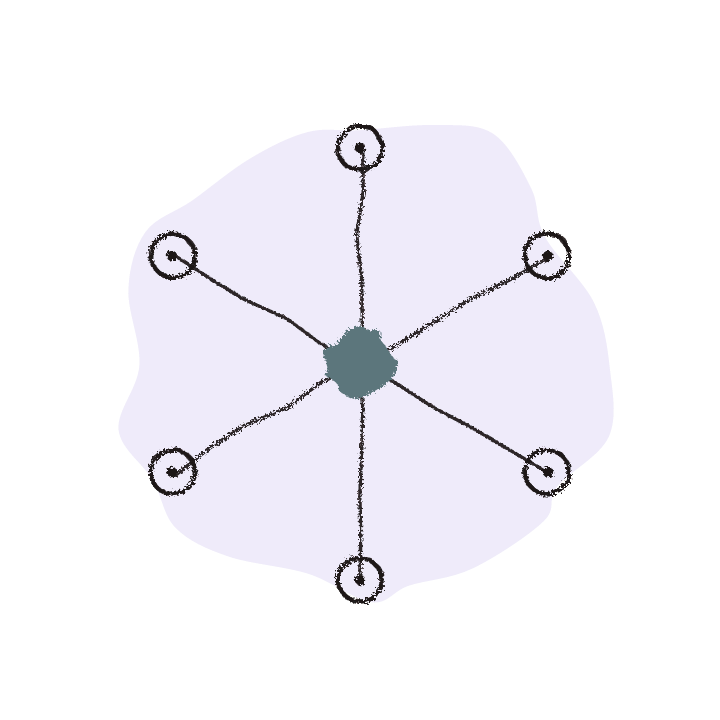
Synapses of Design takes inspiration from synapses: dynamic spaces where signals are exchanged, transformed, and reimagined. By choosing this theme, the conference wants to reinforce design as a mediator between disciplines, experiences, and forms of knowledge. Building on its established traditions in design and dementia, and fostering collaboration across disciplines, the conference embraces productive friction as a catalyst for innovation, dialogue, and the continued growth of both the research field and its community.
Rooted in design, the conference embraces the act of making across adjacent fields. We therefore welcome submissions from the following disciplines and thematic areas:
Co-Creation & Participation
Arts, Design & Meaning-Making
Neuroscience & Neurotechnology
Neuroarchitecture & Inclusive Design
Human-Computer Interaction
Public Health & Society
Psychology, Everyday Life & Well-Being
Ethics, Inclusion & Futures
Submission system opens: 15 January 2027
Submission deadline: 15 April 2027
Authors’ notification: 15 June 2027
Final revised full papers (camera-ready) deadline: 15 July 2027
Conference Date: 27-29 September 2027
Important Dates for Full Paper Submission
Submission Domains
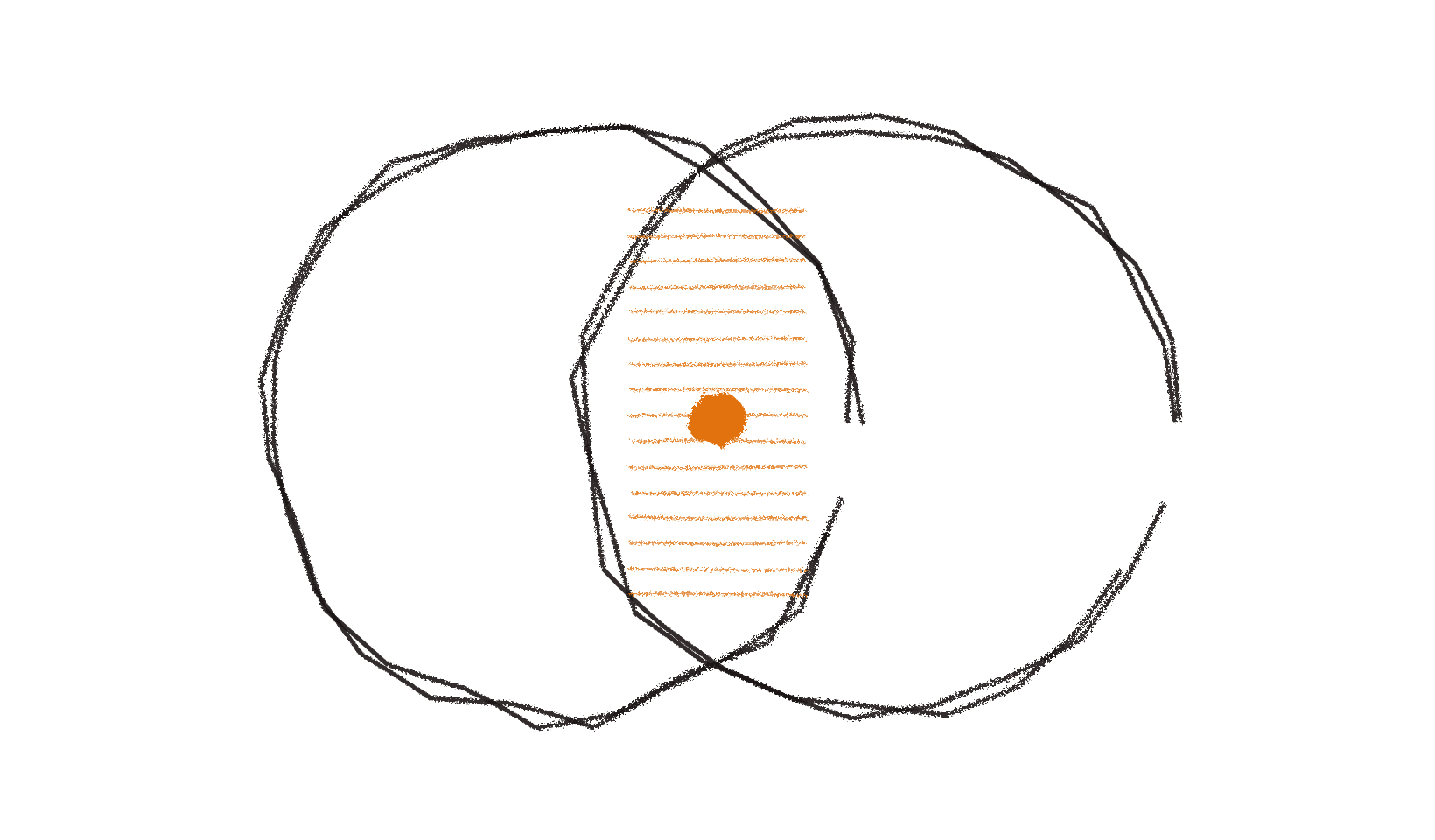
The conference theme invites participants to look for potentials and tensions, to build connections where there are gaps, to engage with friction rather than avoid it, and to amplify intersections as sites of possibility. We invite submissions from any of the aforementioned thematic and disciplinary areas, encouraging authors to engage in their submissions with topics and questions across three domains: Design Frictions, Design Connections, and Design Potentials.
Design Potentials
Work that imagines new roles and forms of agency for people living with dementia made possible by design encountering other fields.
Work that explores what new materials and technologies can offer to design in the context of dementia.
Work that includes novel groups of participants and stakeholders who have been less included so far in design and research processes for dementia.
Research that looks at speculative design futures within the context of design for dementia.
Work that explores translating design outcomes to industry, policy, and real-life applications.
-
Unbehaun, D., Taugerbeck, S., Ahmadi, M. et al. Engaging in Sensitive Practices: Insights and Challenges from a long-term Participatory Design Project with People with Dementia. Computer Supported Coop Work 35, 4 (2026). https://doi.org/10.1007/s10606-026-09538-4
Vetter, R., Frauenberger, C., Dobrosovestnova, A., Brunnmayr, K., Frijns, H.A. (2025). Expanding the Concept of Personhood: Towards a Posthumanist Approach to Designing for Dementia. In: Branco, R.M., Figueiredo, D., De Coen, A., Craig, C. (eds) Dementia Lab 2025: Ethics + Aesthetics in Design. D-Lab 2025. Design For Inclusion, vol 5. Springer, Cham. https://doi.org/10.1007/978-3-031-84901-5_2
Bormans, L., Van Gorp, B. (2025). How Framing Shapes Dementia Research and Design: Subliminal Influences and Considerations. In: Branco, R.M., Figueiredo, D., De Coen, A., Craig, C. (eds) Dementia Lab 2025: Ethics + Aesthetics in Design. D-Lab 2025. Design For Inclusion, vol 5. Springer, Cham. https://doi.org/10.1007/978-3-031-84901-5_4
Branco, R.M., Hendriks, N., Lenaerts, L., Wilkinson, A. (2021). The Challenges of Creating Design Requirements for Products for People with Dementia. In: Brankaert, R., Raber, C., Houben, M., Malcolm, P., Hannan, J. (eds) Dementia Lab 2021: Supporting Ability Through Design. D-Lab 2021. Design For Inclusion, vol 2. Springer, Cham. https://doi.org/10.1007/978-3-030-70293-9_2
Design Connections
Work that combines perspectives to design and research for dementia, reflecting on what that combination has made possible.
Work that draws on design to include people living with dementia and their contexts as co-researchers and co-designers.
Work that addresses multiple dimensions of dementia at once and reflects on what results by holding them together.
Work that brings tools, practices, and knowledge across disciplines and standpoints together.
Work that moves beyond existing disciplinary connections, focusing on the needs, benefits, or challenges of more interdisciplinary approaches for research and design in dementia.
-
Rass, E., Unbehaun, D., Aal, K., Tandler, J., Lenz, G., & Wulf, V. (2025). Designing for those who are overlooked-investigating long-term impacts of social robotics for people with advanced dementia, caregivers and relatives in a secured care environment. Proceedings of the ACM on Human-Computer Interaction, 9(1), 1-30.
Gramegna, S.M. (2025). Feels like Home: A Participatory Approach to Enhance Care Environments Through Personal and Collective Stories. In: Branco, R.M., Figueiredo, D., De Coen, A., Craig, C. (eds) Dementia Lab 2025: Ethics + Aesthetics in Design. D-Lab 2025. Design For Inclusion, vol 5. Springer, Cham. https://doi.org/10.1007/978-3-031-84901-5_10
Walker, M. (2025). Does the Mind’s Eye Remain Intact? Using Colour to Support the Expression of Everyday Aesthetic Preferences in Dementia. In: Branco, R.M., Figueiredo, D., De Coen, A., Craig, C. (eds) Dementia Lab 2025: Ethics + Aesthetics in Design. D-Lab 2025. Design For Inclusion, vol 5. Springer, Cham. https://doi.org/10.1007/978-3-031-84901-5_3
Design Frictions
Work that engages with frictions in methods, knowledges, approaches, perspectives, or priorities that appear when different fields come together in design and research for dementia.
Work that explores challenges in translating between sciences, design, research, and practice, and how design and other fields can address these.
Work that surfaces the ethical tensions or conflicting values behind different approaches to dementia in science, research, design, and practice.
Work that surfaces tensions between framings of dementia, for instance, between biomedical and sociopolitical perspectives, and how these impact research, design, and care in practice.
Work that explores the tension between doing participatory and person-centered design research within the context of dementia, scientific rigour, and formats of academic research and publishing.
-
Unbehaun, D., Aal, K., Vaziri, D. D., Tolmie, P. D., Wieching, R., Randall, D., & Wulf, V. (2020, April). Social technology appropriation in dementia: Investigating the role of caregivers in engaging people with dementia with a videogame-based training system. In Proceedings of the 2020 CHI conference on human factors in computing systems (pp. 1-15).
Beijer, S., Brankaert, R. (2023). House of Memories: A Tangible and Multisensory Museum Installation Focused on Daily Life with Dementia. In: Houben, M., Brankaert, R., Hendriks, N., Wilkinson, A., Morrissey, K. (eds) Dementia Lab 2022: The Residue of Design. D-Lab 2022. Design For Inclusion, vol 3. Springer, Cham. https://doi.org/10.1007/978-3-031-14466-0_6
Unbehaun, D., Raß, E., Tandler, J., Lenz, G., Wulf, V. (2025). Social Robots at Play: Enhancing Social Interaction and Well-Being for People with Advanced Dementia and Their Ecosystem in a Secured Care Context. In: Branco, R.M., Figueiredo, D., De Coen, A., Craig, C. (eds) Dementia Lab 2025: Ethics + Aesthetics in Design. D-Lab 2025. Design For Inclusion, vol 5. Springer, Cham. https://doi.org/10.1007/978-3-031-84901-5_6
Treadaway, C., Fennell, J., Seckam, A., Taylor, A. (2023). Compassionate Design—HUGs on Prescription. In: Houben, M., Brankaert, R., Hendriks, N., Wilkinson, A., Morrissey, K. (eds) Dementia Lab 2022: The Residue of Design. D-Lab 2022. Design For Inclusion, vol 3. Springer, Cham. https://doi.org/10.1007/978-3-031-14466-0_1

Submission Guidelines
All full papers must be original work and not be under simultaneous review elsewhere.
Papers should be between 3500 - 4000 words, excluding references, with an abstract of 150–250 words and a maximum of 3 keywords.
A limit of max. 4 figures or images per full paper.
Full papers must be submitted in a simple one-column layout for submission.
Full papers must be submitted via EasyChair.
A plain language summary must be submitted together as a separate file with every full paper submission in EasyChair. All authors of accepted full papers will be asked to create an optional video or audio summary (see below).
Accepted papers will be prepared in the publisher’s template (to be announced), with accessible figure descriptions (alt text).
At least one author of each accepted paper must register for the conference, attend in person, and present the paper onsite.
Plain Language Summaries
Alongside the full paper, authors must submit a plain language summary.
Summaries must not exceed 200 words, if supportive of the summary include maximum 1 picture, and be submitted anonymously. Summaries should follow the DEEP guidelines or Dementia Australia guide for writing about dementia and draw on plain language best practices.
The plain language summaries will be published alongside the final accepted papers
Video/Audio Summaries of Accepted Papers
Building on the positive experience from previous Dementia Lab Conferences, we strive to make our work accessible to audiences outside of academia and professional contexts. Authors of accepted papers will thus be invited to optionally submit a 1-minute video summary of their work. The videos will be played for people with lived experience of dementia to ask for feedback.
The video summary should respond to the following questions in accessible language:
What is this work about?
What did you do?
What did you find out?
Why is this important to people living with dementia?
If authors prefer to not record a video, we invite them to create an audio-recoding responding to the same questions.
The video/audio summaries follow the same deadline as the camera-ready submissions and should be uploaded alongside them through the easychair platform as a separate file.
Submissions should be MOV. or MP4 format (file size limit tbd).
The video/audio are only used internally for this review process.
Based on these video/audio summaries, people with lived experience of dementia will share their feedback and questions on these submissions. The authors will receive this feedback at the latest two weeks before the conference. This feedback will also be shared with the respective session chairs of each paper session to support the facilitation of the session.
Review Process
Papers will be double-blind reviewed; author and affiliation sections must be left blank, and all other identifiable information excluded from the manuscript.
Each paper will be reviewed by three expert reviewers according to the novelty, rigour, clarity of writing and alignment with the conference. A paper chair will handle each paper and write a meta-review.
All submitted papers will additionally go through a plagiarism check.
Use of Generative AI Tools in Preparing Submissions
The use of generative AI software tools such as large-language models (LLMs) must be clearly marked where used for purposes beyond editing the author’s own text. This should be included already in the submission phase, and this section will not count toward the word limit. Papers failing to acknowledge use of generative AI software tools may be desk rejected.
Examples of generative AI use that need to be declared:
Conduct of the research project
Data analysis
Creation of artifacts and outcomes
Policy on Research Ethics and Privacy Measures
Any research involving human participants or approaches carrying meaningful risk must go through the ethics review process required by the authors' institution or research context. Because these processes vary, we ask authors to include a short statement describing what applies to them and how they met it. Where a contribution comes from someone without access to formal institutional review, we ask instead for a brief account of how ethical care was taken. Authors should obtain informed consent for data collection and for (anonymised/pseudonymised) publication. We explicitly invite authors to reflect on their research process beyond formal approval, and on the ethical questions they noticed and responded to along the way.
Paper Chairs
Amber De Coen, Ralf Vetter, Claire Craig, Max Montgomery